Hot Water Slab Leak Repair in Redding, CA
Hot water lines fail beneath residential foundation slabs significantly more often than cold water lines. When dealing with hot water slab leak repair Redding situations, homeowners not only face the risk of structural foundation moisture damage, but also soaring natural gas or electricity bills as water heating systems run uninterrupted day and night.
Understanding why hot water supply lines fail and recognizing the telltale physical indicators allows Redding homeowners to act swiftly before prolonged exposure to heated moisture degrades flooring adhesives, rots subflooring, or creates extensive drywall humidity damage.
Why Hot Water Lines Fail First Under Foundation Slabs
The primary reason subterranean hot water lines exhibit higher failure rates lies in thermal physics: continuous expansion, contraction, and elevated operating temperatures. Copper is a highly ductile metal that expands when heated and contracts when cooled. In residential plumbing systems, every time a shower, washing machine, or faucet demands hot water, the subterranean copper pipe heats up and physically lengthens.
When the faucet closes, the dormant water cools and the pipe contracts back to its resting length. If the underground pipe was laid directly in rough sand or coarse gravel aggregate during foundation construction without protective polyethylene sleeving, this thermal expansion cycle causes the outer pipe wall to constantly grind against sharp rock edges. Over 15 to 30 years in Redding ranch homes, this mechanical friction wears microscopic trenches through the copper wall until pressurized water breaks free.
Additionally, elevated water temperatures accelerate internal chemical reactions. Dissolved minerals, municipal water sanitizing agents, and internal turbulence attack the hot copper pipe wall at a substantially faster rate than in cold water lines, leading to localized thinning and recurrent pinholes.
Telltale Signs of an Under-Slab Hot Water Line Leak
Property owners can often confirm a hot water line failure by observing several distinctive symptoms:
- Noticeable warm spots on the floor: Walking barefoot across tile, vinyl plank, linoleum, or carpet and encountering an unexpected patch of warmth is the classic hallmark of a warm spot on floor Redding emergency.
- Water heater running constantly: Hearing your gas burner firing continuously or electric heating elements buzzing around the clock, even when no appliances are running, is a clear sign of water heater running constantly Redding distress.
- Astronomical energy bills: An unexpected, dramatic spike in monthly PG&E gas or electric bills caused by heating thousands of gallons of water that escape directly into the ground.
- Depleted hot water reserves: Running out of hot water unusually fast during normal morning showers because hot water line leak under slab Redding flow drains the hot storage tank.
- Warping or swelling floorboards: Moisture combined with warmth causes engineered hardwood and laminate floor planks to swell, buckle, or crown along their joint seams.
Is Your Floor Warm to the Touch?
A warm floor area means pressurized hot water is escaping beneath your foundation right now. Contact our Redding team immediately to prevent subfloor rot and curb utility costs.
Call (888) 205-7875 for Immediate ServiceHow We Pinpoint Hot Water Leaks with Thermal Imaging
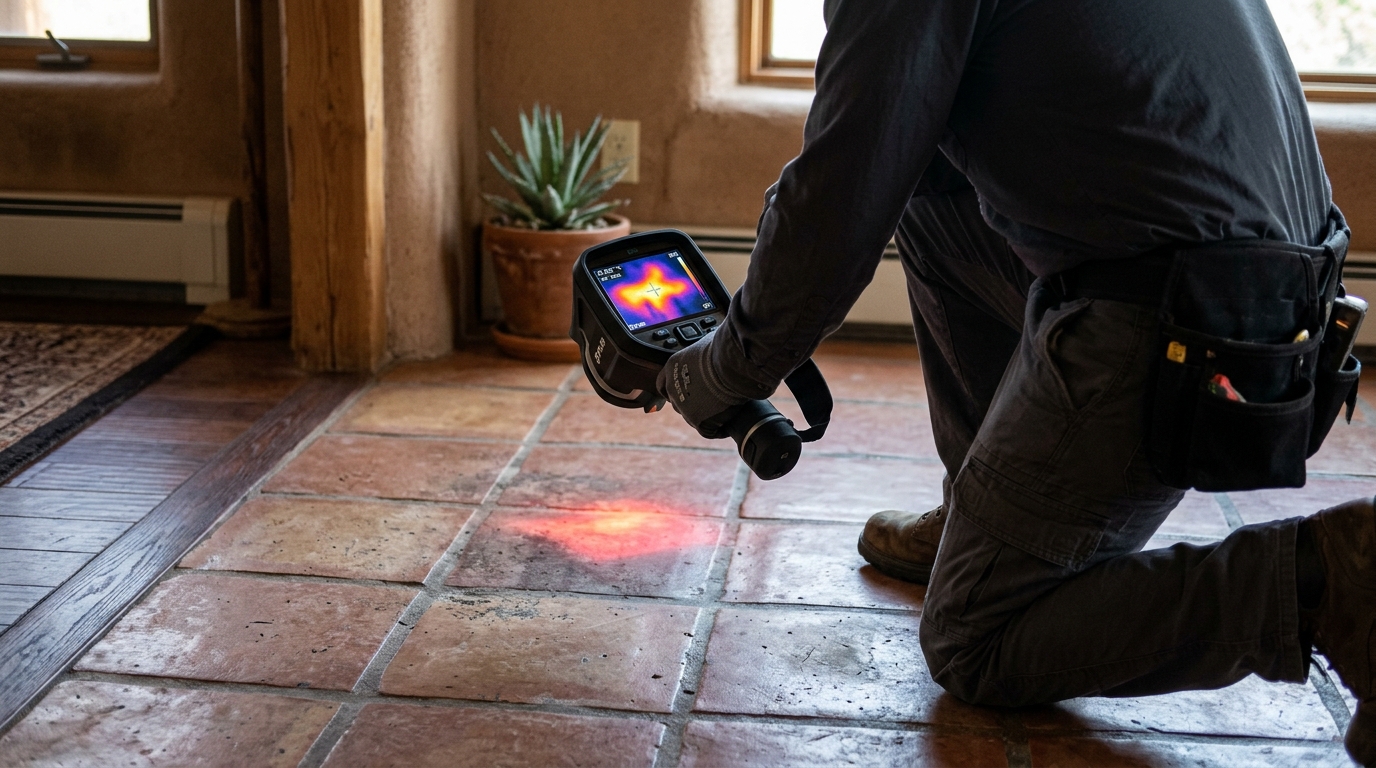
Locating a hot water leak beneath concrete provides a significant diagnostic advantage when using high-resolution infrared thermal imaging cameras. As heated water escapes the ruptured pipe, it transfers thermal energy through the subgrade soil and into the concrete foundation.
By scanning the home's floor surfaces with calibrated infrared sensors, technicians can visualize the distinct thermal gradient. The hottest focal point—the center of the radiant thermal bloom—reveals the exact rupture point with extreme accuracy, eliminating exploratory concrete demolition. Plumbers then cross-reference this thermal profile with acoustic listening instruments to verify the acoustic frequency of escaping pressurized water.
Repair Options: Direct Spot Repair vs. Overhead Hot-Side Reroute
Once the rupture point is confirmed, Redding homeowners must decide between two primary remediation strategies:
- Direct Surgical Spot Repair: If the leak sits in an accessible utility area or closet with concrete floors, technicians cut a neat, small penetration through the concrete, expose the breached copper, braze in a new heavy-gauge copper section with protective thermal sleeving, and seal the foundation opening. However, if the rest of the under-slab hot line is aged and brittle, direct repairs do not protect against subsequent failures elsewhere along the same line.
- Dedicated Hot-Side Overhead Reroute: In the vast majority of residential cases, bypassing the compromised line via a modern slab leak reroute is the superior engineering choice. Plumbers abandon the underground hot line entirely, disconnect it from the water heater manifold, and route a new, continuous, insulated commercial-grade PEX line through the attic or ceiling chases directly to the affected bathroom or kitchen fixture. This isolates your living areas from future hot water slab leaks forever.
A continuous underground hot water leak forces residential water heaters to cycle without respite, accelerating tank sediment buildup and risking premature tank rupture. If your water heater has experienced prolonged thermal cycling during a leak, ask our technicians to inspect the tank's burner assembly and pressure relief valves.
For extensive plumbing failures where both hot and cold lines are compromised, explore our comprehensive whole-house repiping services, or learn more about initial diagnostics on our slab leak detection page. You can also review our full slab leak repair in Redding solutions.
Stop Wasting Costly Energy and Sinking Foundations
Our licensed technicians specialize in non-invasive thermal imaging and rapid overhead reroutes throughout Redding and Shasta County.
Call (888) 205-7875 to Schedule Inspection